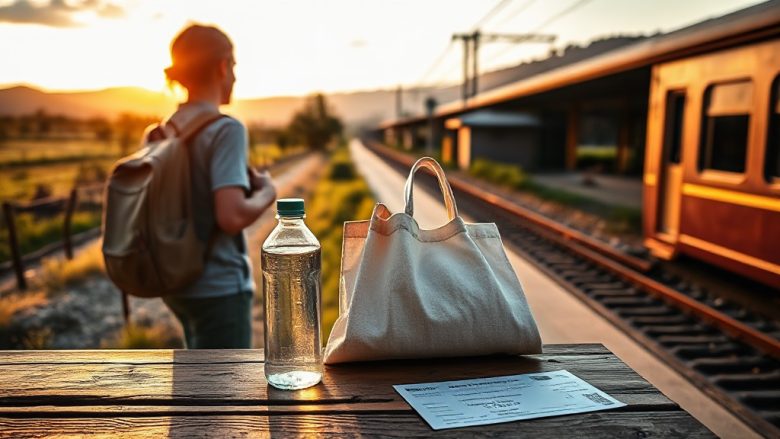
I want to travel greener but I am worried about getting it wrong. That sentence sat with me for months before my first proper low-impact trip. I pictured myself standing in a foreign airport with a bamboo toothbrush, a reusable bottle nobody would let me fill, and a growing suspicion that I had packed for the wrong holiday entirely. If that sounds familiar, this is for you. Rather than another list of worthy ideals, here is an eco travel checklist for first timers built around the worries that actually keep people up at night, and the fixes that make each one smaller.
Common Worries and Mistakes First-Time Eco Travellers Make
The first mistake is treating green travel as a test you can fail. It isn’t. There’s no examiner at the gate, no scoreboard, and no penalty for a plastic straw you didn’t plan for. The second mistake is over-packing for a version of the trip that doesn’t exist: a fantasy where every town has a refill station, every cafe welcomes your container, and every hostel has a recycling bin with helpful little pictures. Reality is messier, and that’s fine.
A third worry, and probably the loudest one, is the flight. People agonise over whether they should fly at all, then either cancel the trip or book it and feel guilty for a year. My honest take: one flight taken thoughtfully, with a longer stay and local spending, usually beats three short breaks taken carelessly. You don’t have to be perfect to be better than you were last time.
Then there’s the money worry. Eco travel has a reputation for being expensive, and some of it is. Trains can cost more than budget flights. Organic guesthouses charge more than chain hotels. But a surprising amount of the checklist below saves money rather than spending it, because the greenest choice is often simply to buy less, carry less, and slow down.
Finally, there’s the social worry: the fear of being that person. The one who asks awkward questions about where the water comes from, refuses the complimentary plastic-wrapped snack, and gets quietly judged by the rest of the group. I’ve been that person. It’s survivable, and most of the time people are curious rather than hostile.
The Practical Eco Travel Checklist for First Timers
Here’s the checklist I wish someone had handed me, organised by the worry it solves rather than by category. Use it as a starting point, not a rulebook.
Before you book anything, decide how you’ll get there and how long you’ll stay. Longer trips in fewer places almost always have a lower impact than a rushed itinerary, and they’re usually more enjoyable too. If you can take a train or bus for part of the journey, do it, even if it adds a few hours. Those hours are part of the trip, not a tax on it.
Choose accommodation that tells you something concrete. A hostel with a water-saving notice in the bathroom is more useful than a hotel with a vague sustainability badge on its homepage. Look for places that are locally owned, because money spent with local owners tends to stay in the local economy. If you can’t tell from the website, email and ask two simple questions: where does your water come from, and what happens to your food waste? The answers will tell you more than any logo.
Pack like someone who plans to carry their own rubbish for a while. A small day bag with a reusable water bottle, a couple of cloth produce bags, a compact cutlery set, and a bar of solid soap or shampoo covers most situations. Solid toiletries get through airport security without the plastic bottles, and they last longer than you’d expect. Add a small repair kit: a needle, some thread, a couple of safety pins. Fixing a strap or a hem on the road is easier than replacing the whole item.
Think about what you’ll wear before you think about what you’ll photograph. Quick-drying fabrics mean fewer washes, and fewer washes mean less water and detergent. Two pairs of trousers and three tops, rotated, will carry you through a fortnight if you wash as you go. This isn’t about looking scruffy; it’s about not dragging a suitcase you can barely lift onto a bus that’s already full.
Sort out your money and your documents in a way that doesn’t rely on printing everything twice. Digital copies stored offline on your phone, plus one paper backup tucked in a different bag, is the sensible middle ground. If you’re visiting somewhere with limited recycling, accept that you’ll generate some waste and plan to carry it to a bin you trust rather than leaving it in a village with no collection service.
Learn three phrases in the local language before you go. Please, thank you, and where is the water refill. That last one has saved me more plastic than any gadget I’ve ever bought. People are almost always happy to fill a bottle if you ask politely, and asking is also a small act of respect that changes how you’re treated for the rest of the trip.
And the one item I’d put above all others: a willingness to change your plan. If the train is full, take the bus. If the refill station is closed, buy the biggest bottle you can find and share it rather than four small ones. Eco travel is less about packing the perfect kit and more about making decent decisions in imperfect conditions.
How to Handle the Moments When It Goes Wrong
It will go wrong. You’ll forget your cloth bag and end up with three plastic ones. You’ll order a dish that arrives in a polystyrene box. You’ll take a taxi because the bus stopped running and you were tired and it was raining. None of that undoes the trip.
What matters is the pattern, not the incident. If most of your choices lean one way, a handful of inconvenient moments won’t sink the whole thing. I keep a rough mental tally: one flight, one long stay, local food, refilled water, no single-use bottles where I could avoid them. That’s a decent trip. It doesn’t need to be a perfect one.
There’s also a useful trick for the moments when you feel judged. Say your reason out loud, once, calmly, and then let it go. “I’m trying to avoid plastic this trip” is enough. You don’t owe anyone a lecture, and you certainly don’t owe them an apology for caring.
If you’re travelling with people who don’t share your priorities, agree on a few shared rules before you go rather than negotiating every meal. One refill stop a day, one sit-down local lunch, no bottled water unless the tap isn’t safe. Small agreements prevent the resentment that builds when one person feels like the eco police and everyone else feels nagged.
Frequently Asked Questions About Eco Travel for Beginners
Is it worth travelling green if I’m still flying?
Yes, and the flight is usually the biggest single impact of the trip, which is exactly why the rest of the checklist matters. Stay longer, travel overland where you can, spend money locally, and avoid the disposable stuff. You won’t get to zero, but you’ll get meaningfully lower than a rushed trip with the same flight.
What if the tap water isn’t safe to drink?
Then a filter bottle or purification tablets are your best friends. They’re lighter than carrying litres of bottled water and they work in most situations. In places where even filtered water is risky, buy the largest container you can and decant it into your own bottle rather than buying small ones every day.
Do I need to buy special eco-friendly gear?
Almost never. The most sustainable item is the one you already own. Use the bag you have, the bottle in your cupboard, the cutlery from your kitchen drawer. If you do buy something, buy it once and buy it to last, and don’t replace it just because a newer version exists.
How do I deal with people who think I’m being difficult?
Keep it light and keep it short. Most people aren’t hostile, they’re just unfamiliar with the reasoning. A brief, friendly explanation usually lands better than a lecture, and if it doesn’t, you’re allowed to drop the subject and enjoy your meal. Your choices don’t need everyone’s approval to be worthwhile.
Start with one change on your next trip. Carry a bottle, take the train for one leg, stay two nights longer in one place. The rest of the checklist can wait until you’ve seen how manageable the first step feels. That’s how this becomes normal rather than noble.